INFINITE NINJA

Industrial Electronics Repair - Reverse Engineering - Small Scale Manufacturing - Design
Industrial Electronics Repair - Reverse Engineering - Small Scale Manufacturing - Design
What's On The Bench
Four things keep the bench busy: component-level repair for industrial control boards, with a current focus on Dornier industrial looms; reverse engineering consumer electronics for fun and profit; small-scale manufacturing for prototypes and short-run product development; and designing embedded systems for niche markets and art projects.
Repair Philosophy
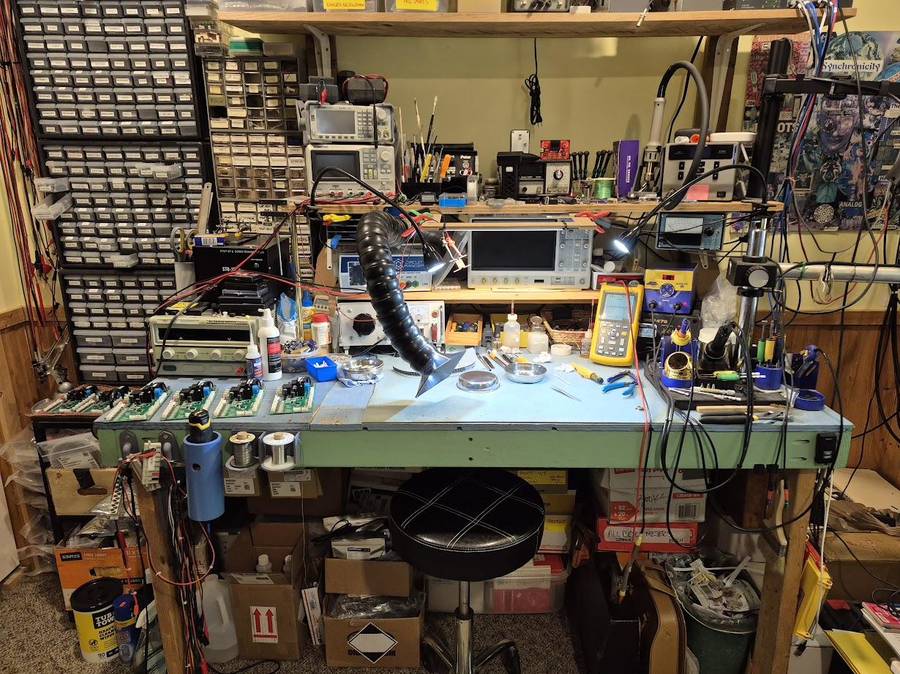
All control boards receive the Standard Repair. Known-faulty parts get replaced preemptively, not just the part that failed, but the ones with a track record of failing. The board isn't just repaired, it's reconditioned — a stamp of assurance backed by a one year repair warranty.
A Bit Of Background
Dornier was one of the first textile machine manufacturers to adopt the CAN bus standard — years before the auto industry caught on — and looms they built decades ago are still in service today, provided someone keeps repairing, servicing, and running them. American textile manufacturing was once a major domestic industry, from the mill towns of New England to the textile belt of the Carolinas; most of that capacity has since moved overseas, and what's left is worth keeping running. These looms are mostly steel and iron, so the realistic alternative to repair is the scrap metal yard — every board repaired is a step closer to keeping a loom productive on the plant floor. Electronics repair and troubleshooting is a quiet kind of craft that way, and in a world full of disposable electronics, it's nice to be part of a slightly more sustainable solution.
What Actually Happens Here
Fine-pitch surface mount and through-hole repair, following a systematic process: inspection and diagnostics, safe desoldering, cleaning corrosion, rebuilding damaged copper traces, and replacing faulty components. Testing is just as structured — a full bench test vetting signatures, resistance, and voltage, followed by a full functional test with the board installed in the simulator.
Fault-finding starts with good magnification — Optivisors are the daily driver at the bench, with a Bausch & Lomb stereo zoom microscope for the extra-close work, camera-fed to a monitor. Comfortable rework in tight quarters, instead of hunching over eyepieces, makes it easy to find faults and perform final inspection.
A growing focus: protocol analysis, bus sniffing, and figuring out how a system actually speaks. Sometimes it's less about finding an exploit and more about the story of how these complex systems work together. Most of the work comes down to fooling a control board on the bench into thinking it's in a working environment, so it can be fully evaluated and tested.
Custom test fixtures and wiring harnesses are used to stand in for signals a board expects to see. A full lab simulator recreates a working environment for each board, with a goal of full functional testing. Enough of the loom in the lab to actually engage and watch the board run.
An extensive inventory means common parts stay in stock, so downtime doesn't wait on a parts order. For anything rarer — parts for boards built in the 90s, or the unobtainium hardware nobody makes anymore — a large collection of donor boards backs up the hunt.
Taking an idea scratched on paper all the way through to physical form — hardware, firmware, and the mechanical design to hold it together. CAD/CAM, tooling, 3D printing, PCB layout. The good ones end up multi-material, which is half the fun.
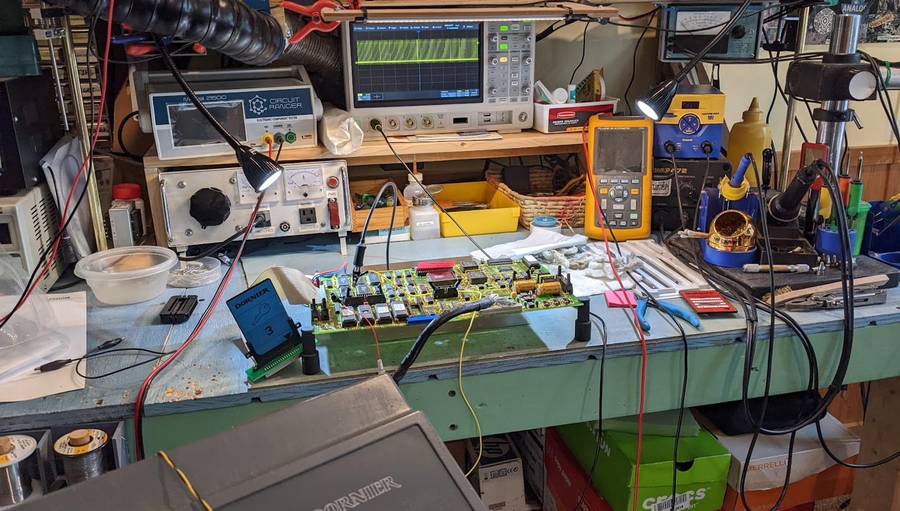
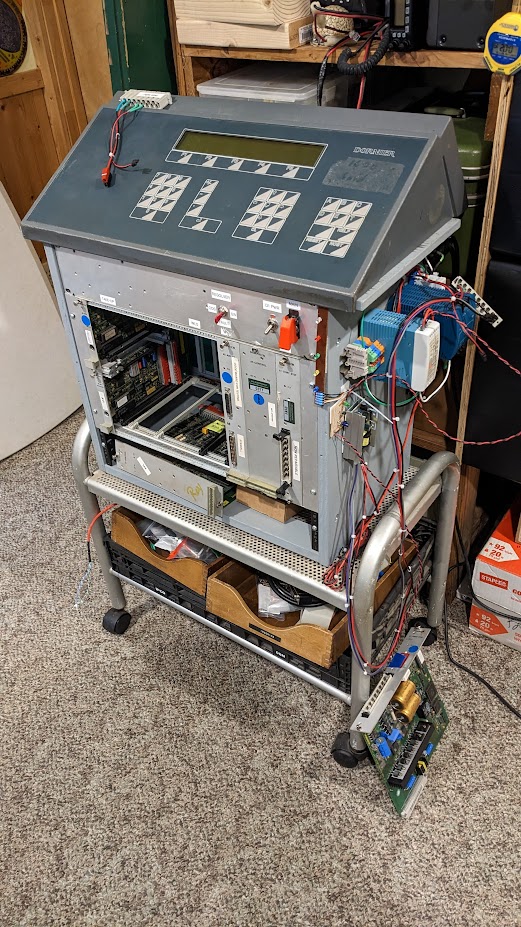
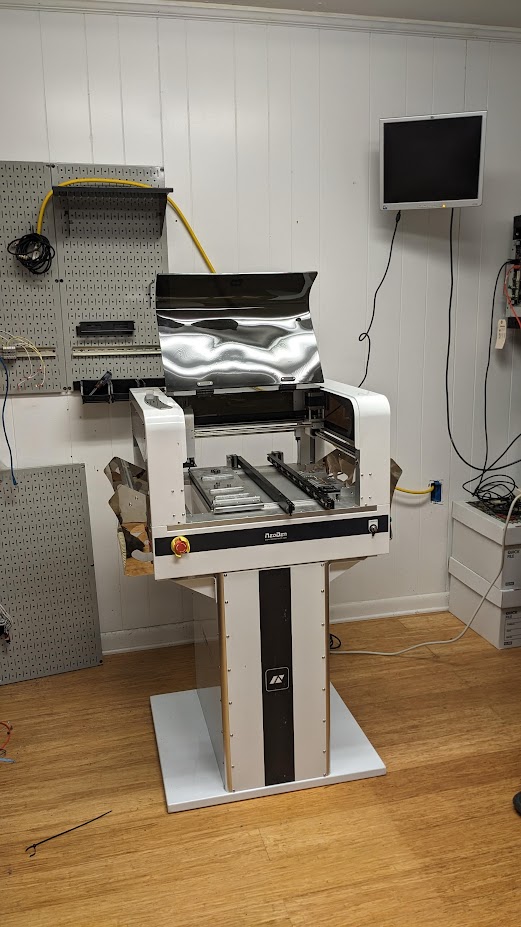
The Bench, Grouped By Function
Things Built, Fixed, Or Broken On Purpose
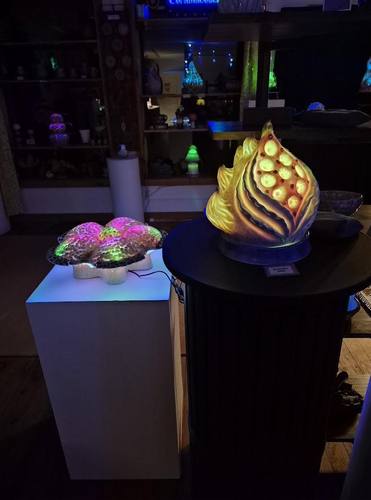
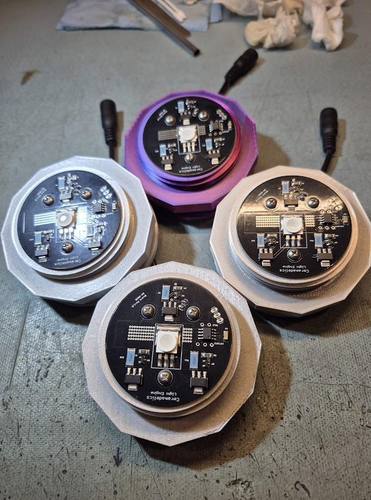
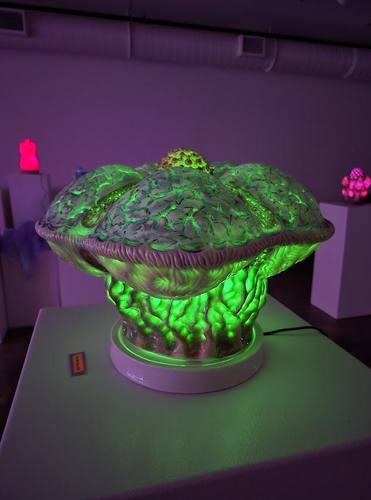
An ongoing collaboration with ceramic artist Bridget Fox — illuminated ceramic sculptures built around custom circuit boards, microcontrollers, and capacitive touch sensing. The clay forms give the light somewhere to live; the electronics give it a pulse.
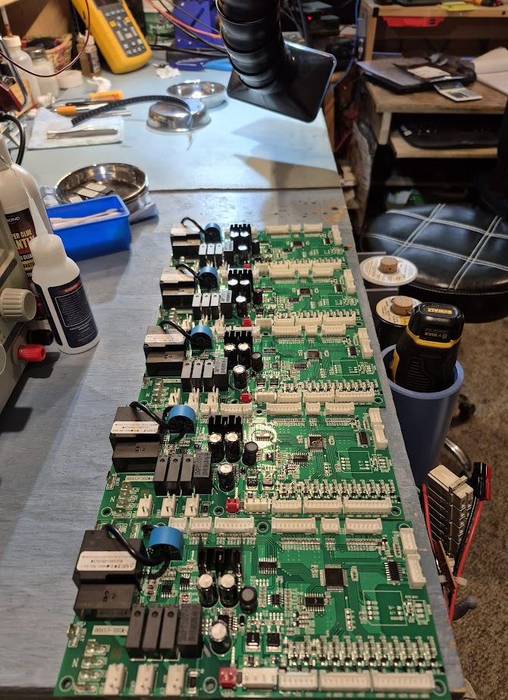
Rush rework on the main CPU card for a batch of Watergen's imported atmospheric water generation machines — an SMD fuse spec'd under the pump's actual current draw, swapped for one rated to handle the real load. Machines were already staged for shipment when the fault turned up, so first turnaround was 48 hours. Fast turnaround for a customer in a bind.
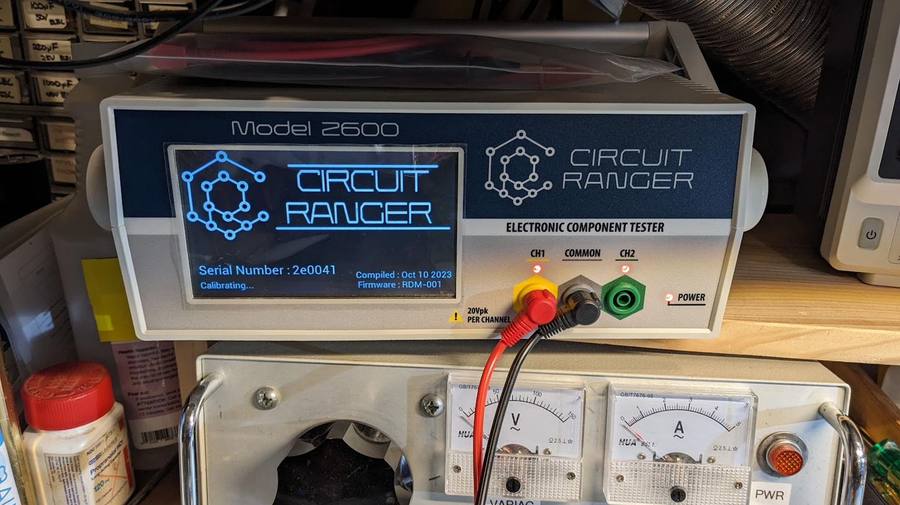
A custom-built signature analyzer, developed with a friend, aimed at outperforming the Huntron Tracker 2800. A foot switch captures and holds a trace on screen — tap it, move to another board or another part of the same board, and compare live against the captured signature. The trace changes color on a match. It's on the bench and in daily use — one of the most important pieces of test equipment here. See it on the Circuit Ranger site.
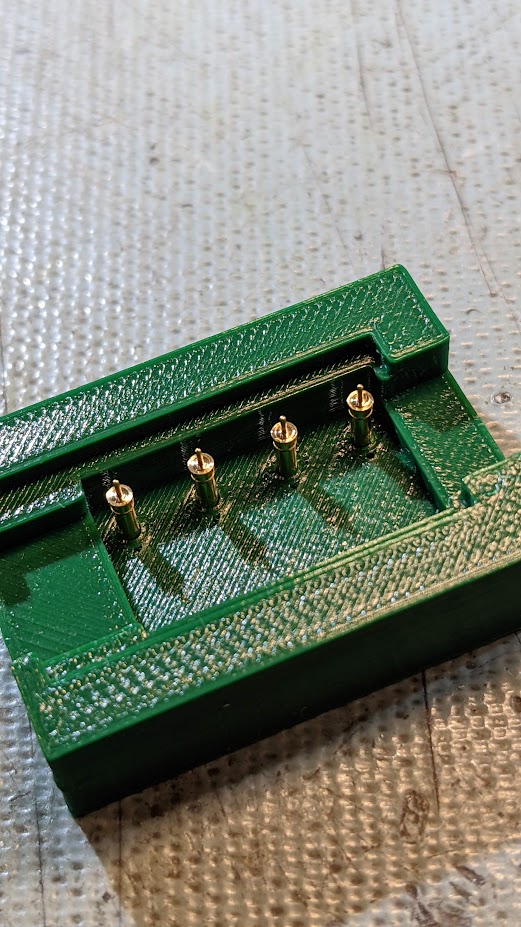
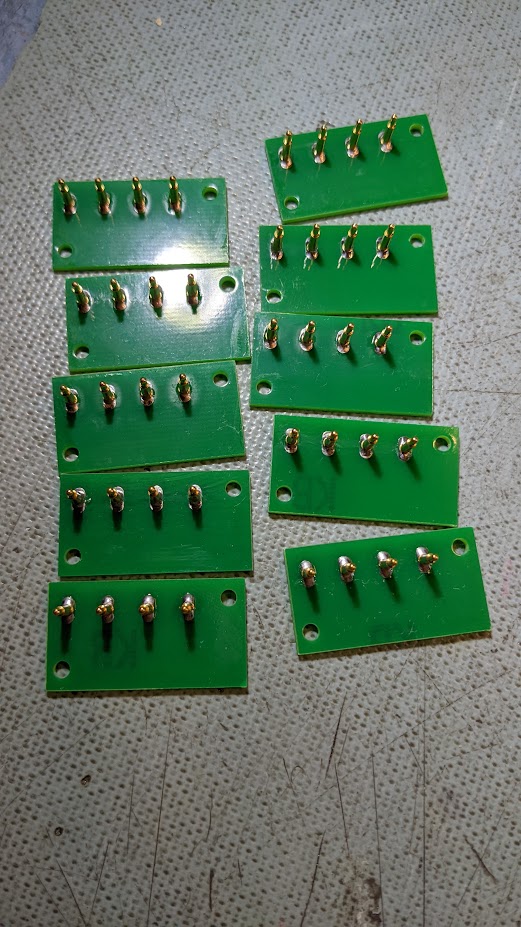
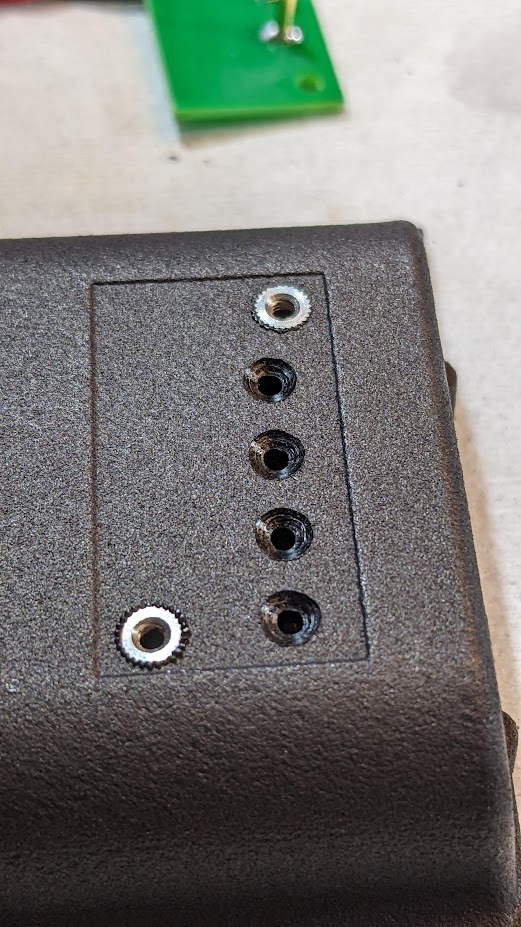
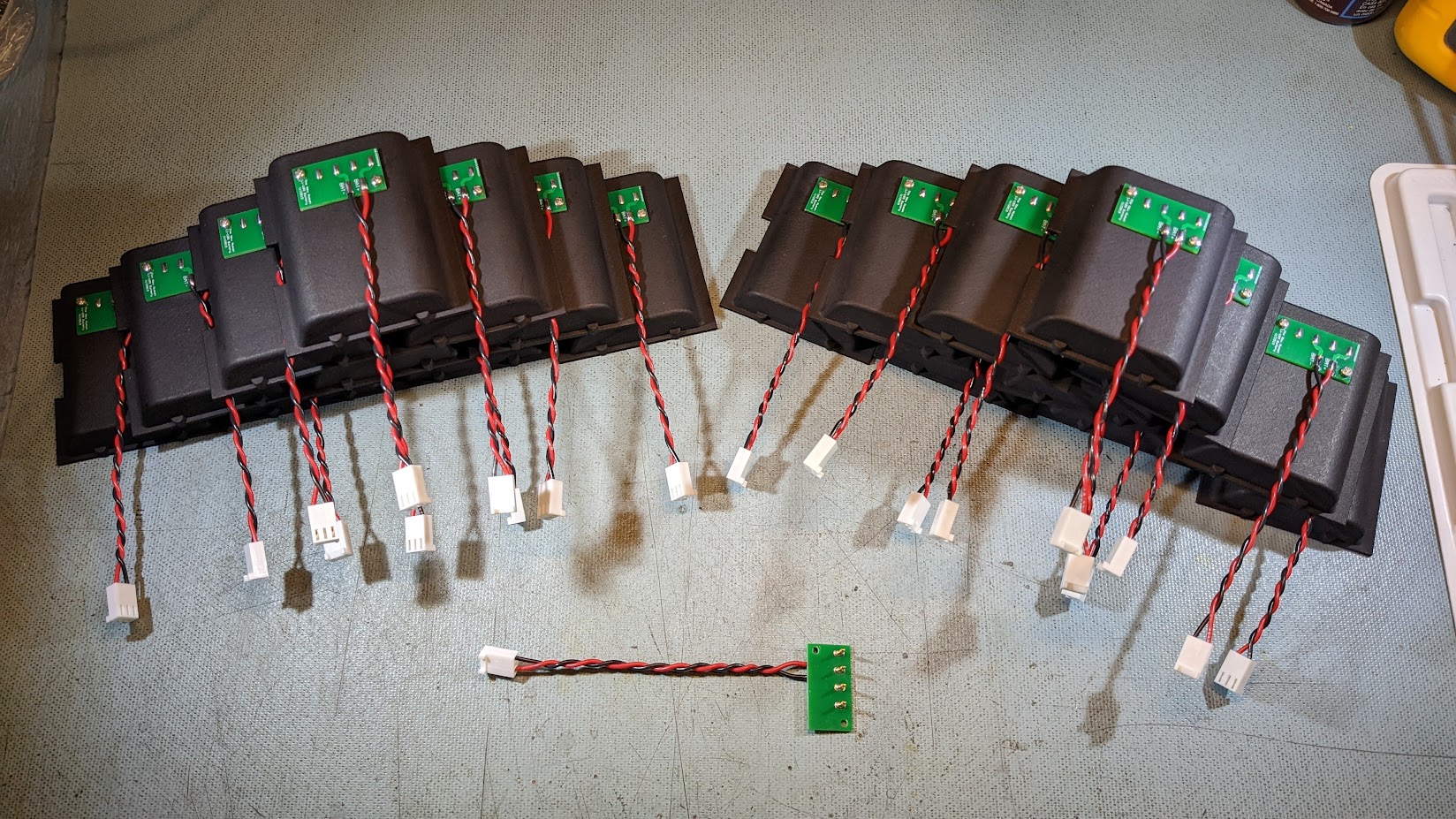
Another project for New Human — a replacement battery tray for their older SLT devices, upgrading them to run on a standard, easy-to-find rechargeable battery. New Human orders the 3D-printed sintered nylon trays through Xometry and ships them over; the pogo-pin PCBs and final installation are handled here, in batches of 25 to 50 whenever their stock runs low. Simple on the surface, but getting the pogo pins soldered in perfect alignment and meeting the battery contacts at the correct depth took a custom fixture and some careful CAD work to pull off. COTS meets NOTS.
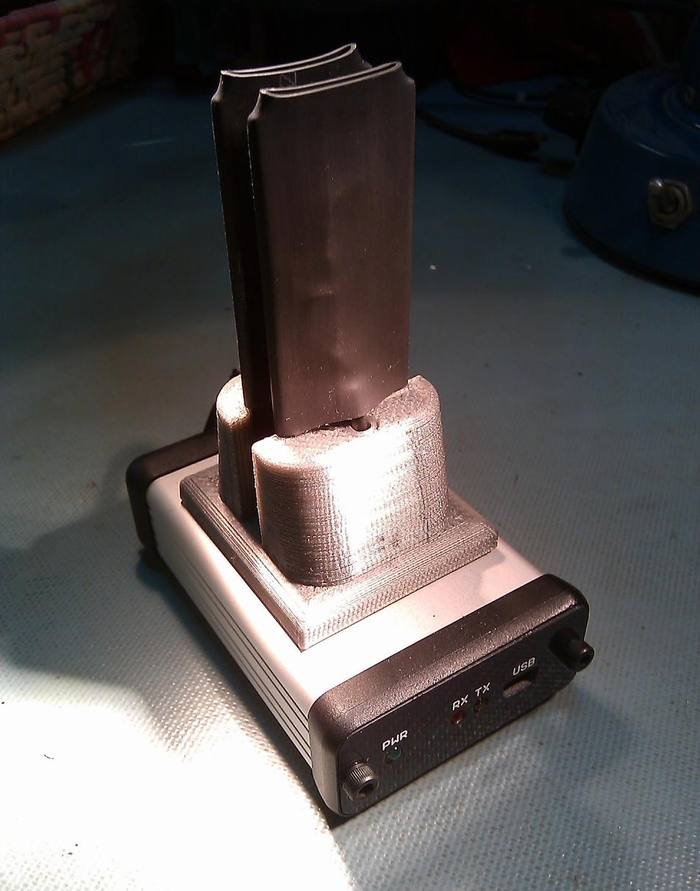
Designed, built, and manufactured the first production units of the Computerized Kater Pendulum, used in Kater Pendulum physics demonstrations for schools, sold through TEL-Atomic.
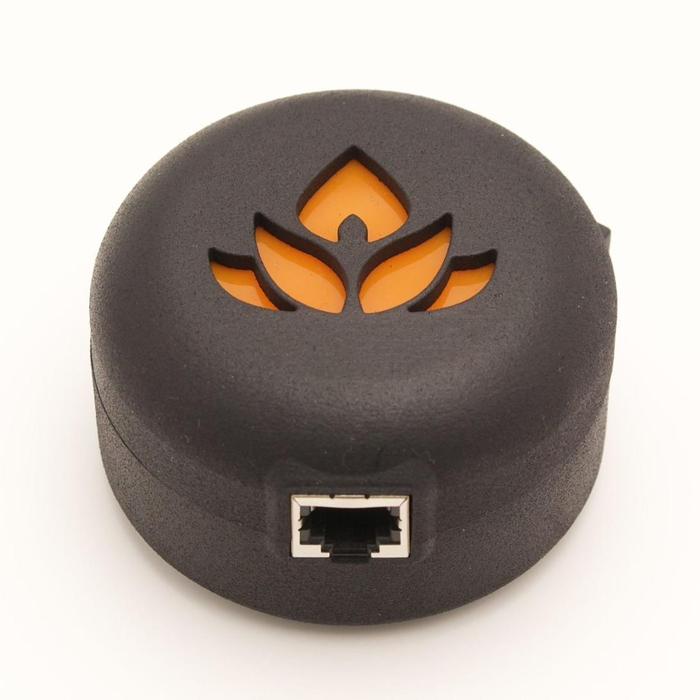
Hardware design for New Human, a client — electronics for their SLT devices, which carry audio frequencies into the body through light. Most recently, the electronics behind their stand-alone SA-SLT controller puck.
Read the product release for the SA-SLT controller.
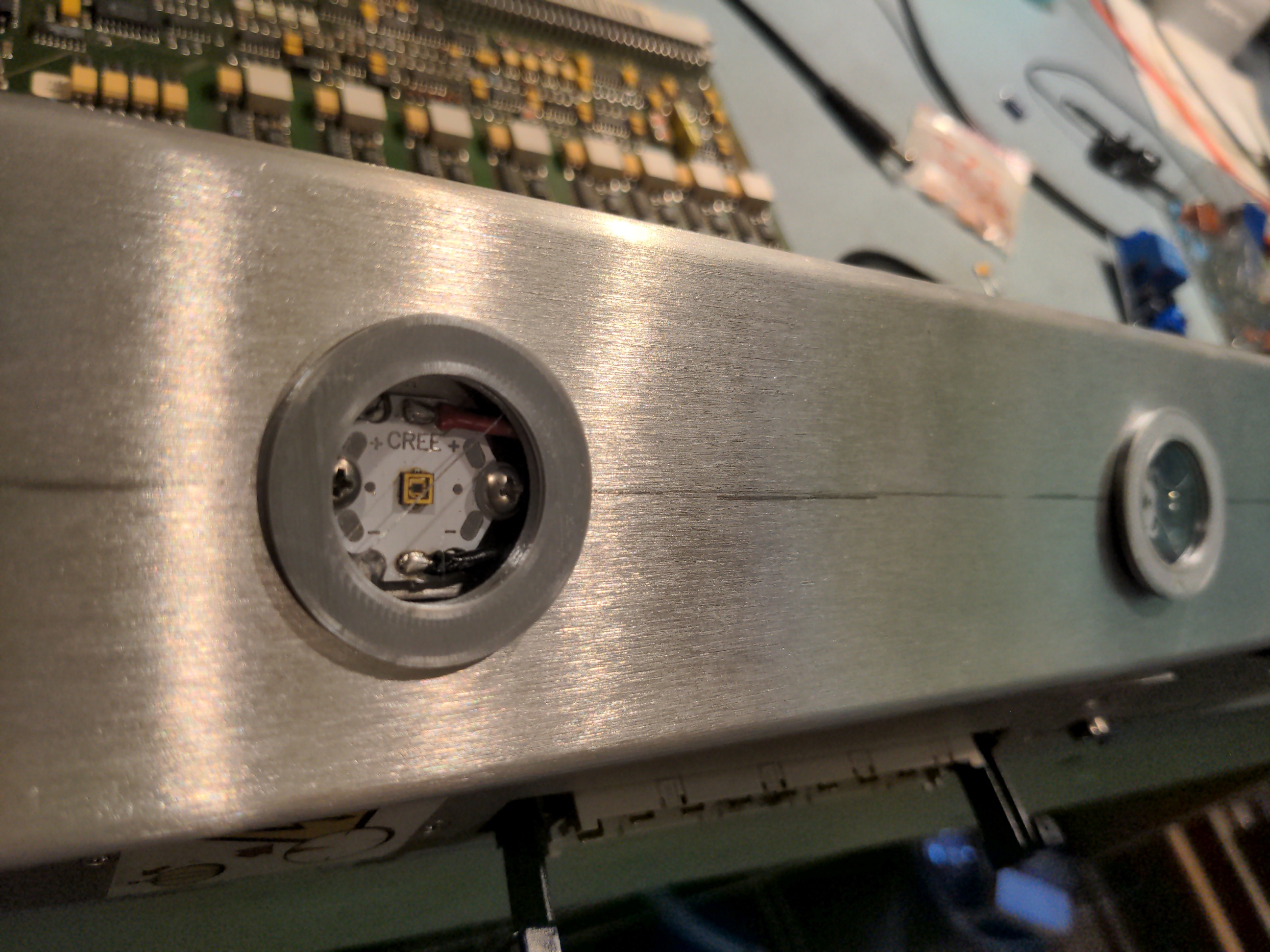
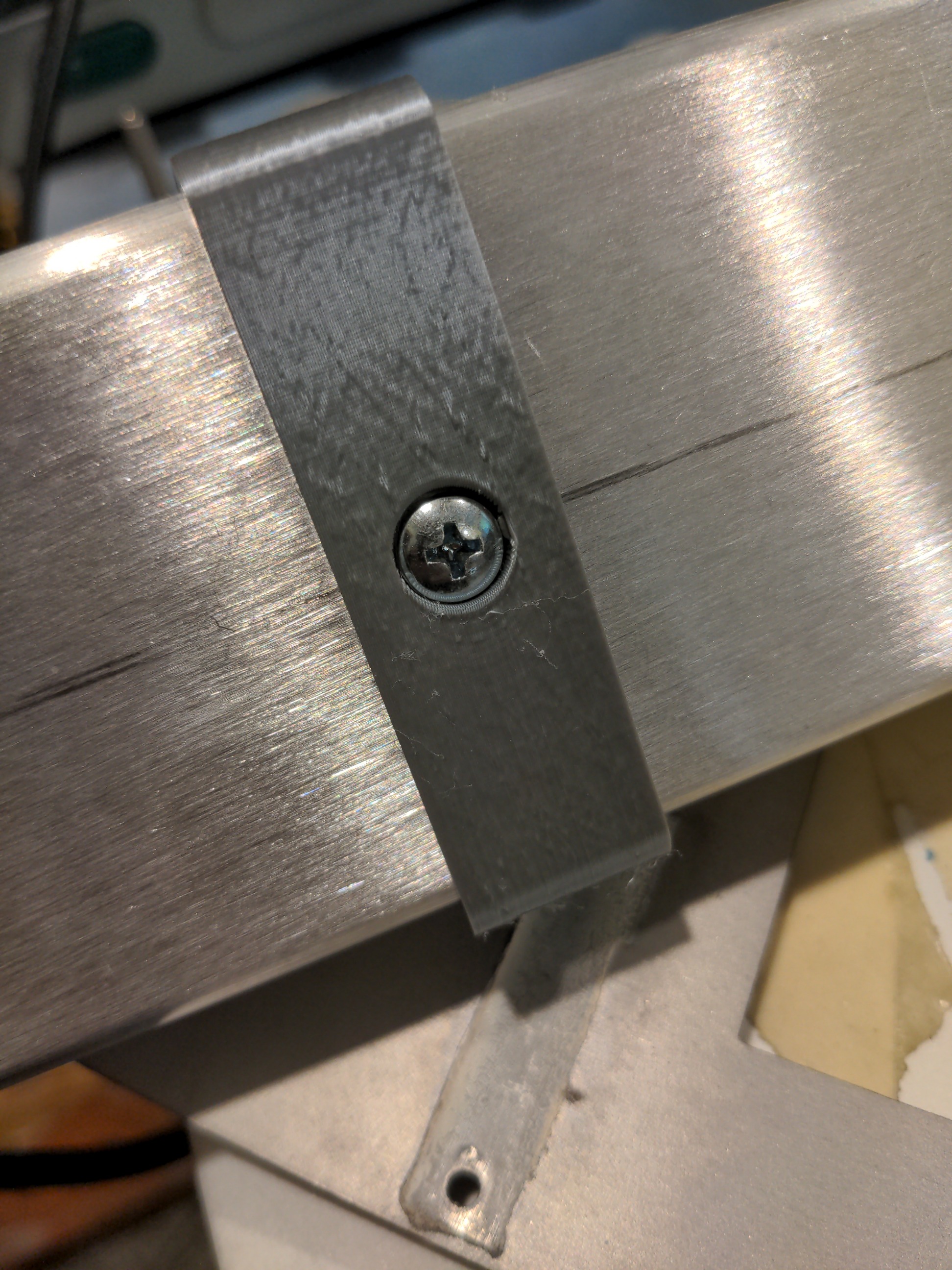
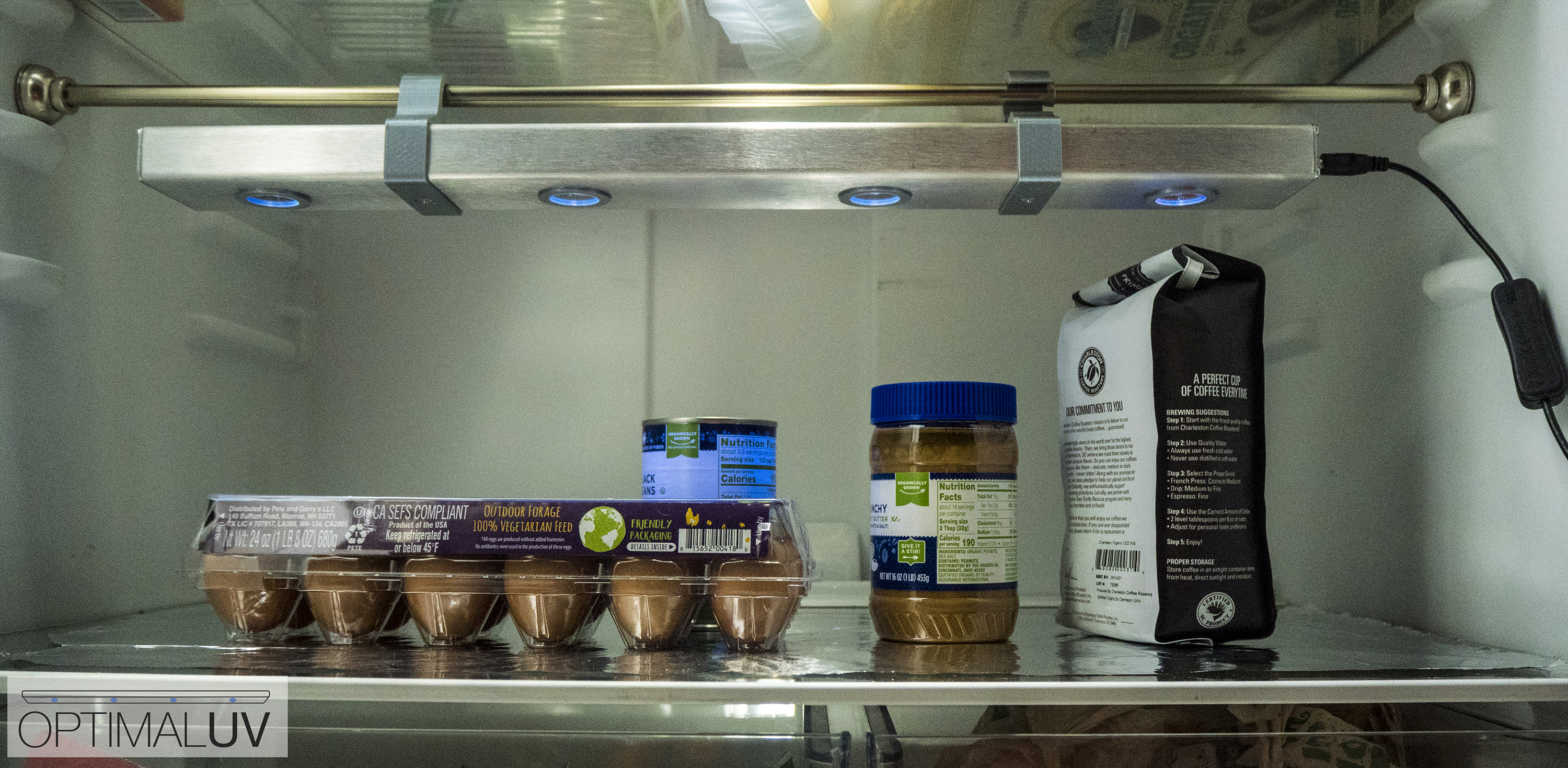
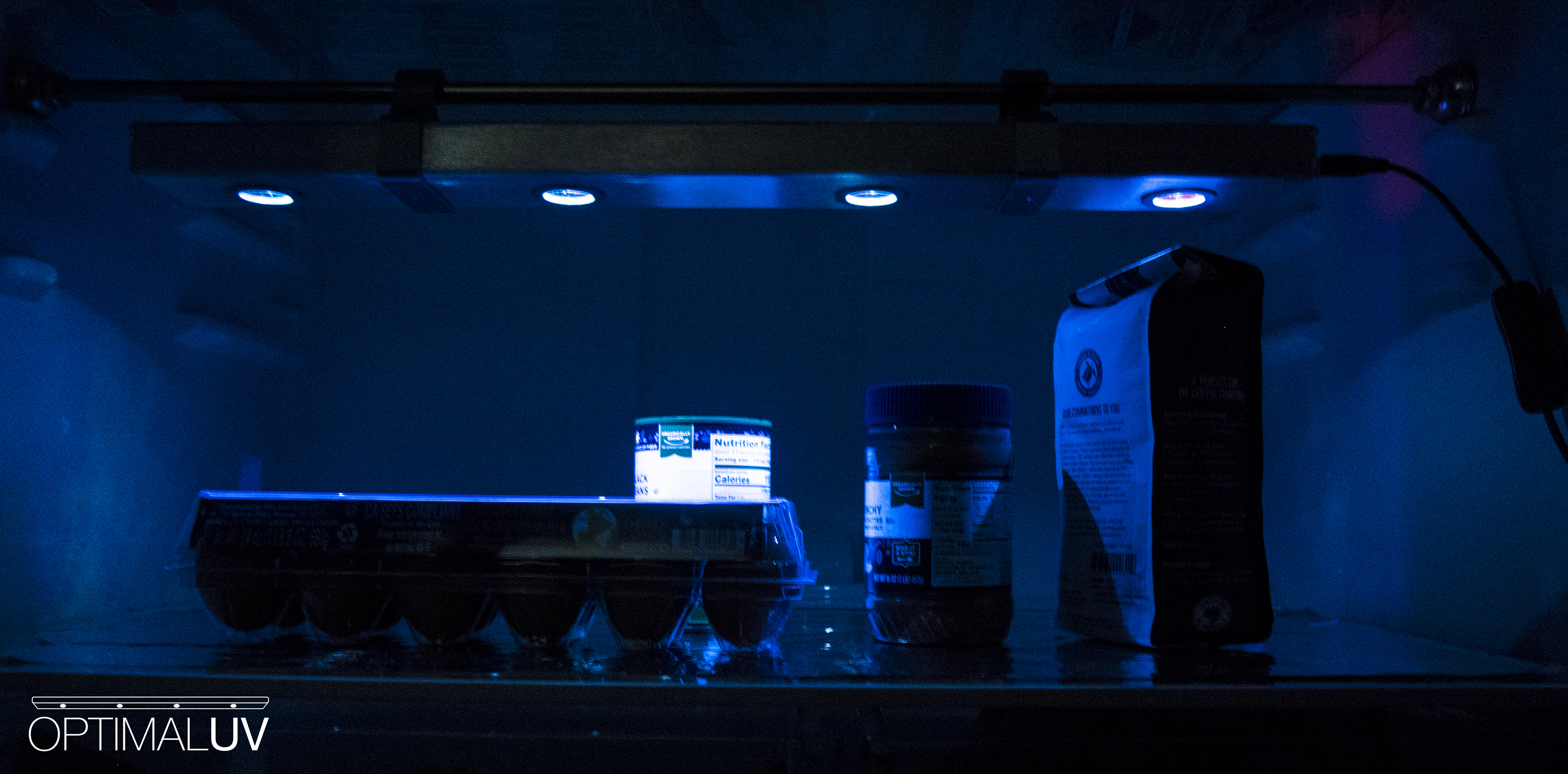
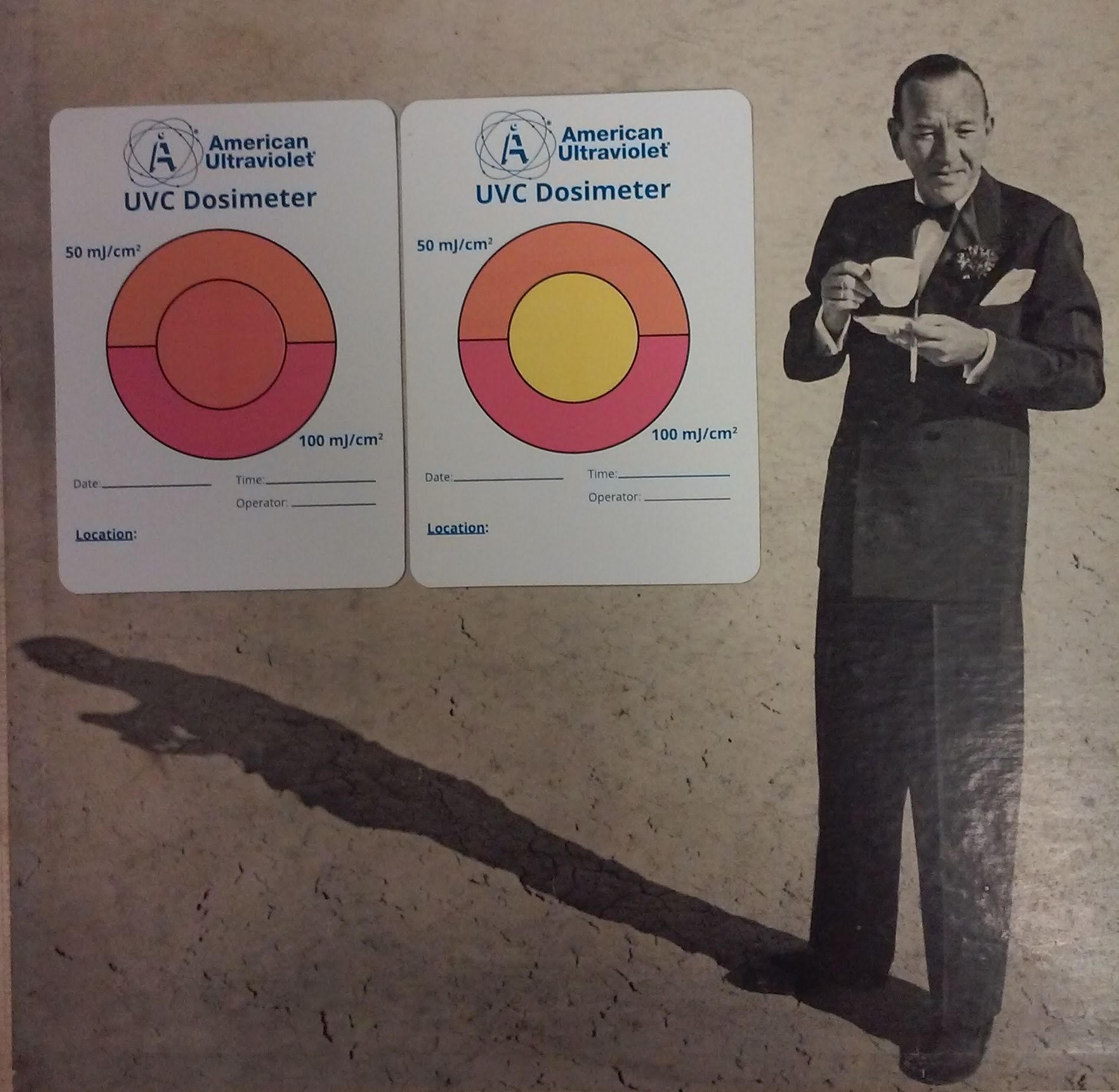
A UVC LED fridge sterilizer, developed in the early days of COVID with a four-person team of friends and relatives — the original idea came from one of them. Four Cree UVC LEDs, narrow-band and ozone-free, mounted in an aluminum extrusion bar with a custom 3D-printed bracket that clips over a common spring-loaded curtain rod — set it inside the fridge and it shines down, no drilling required. Exposure time was tuned empirically with UV dosimeter cards, then automated with a relay trigger board. There was even a design in the works to adapt it for retail cold cases, with the glass door blocking UV from reaching customers while still treating the product inside. Branding, product photography, and the engineering itself were all finished — one complete unit got built and delivered — but it never made it into full production.
Who's Behind The Bench
AAS in Electronics. University lab technician, then a move into industrial repair. There's always been a bench along the way — a 25-plus year practice, always evolving. Happy to lend a hand on small-scale manufacturing, art and open source projects whenever it fits.
Reach The Bench